

The Greystone Park Psychiatric campus was a self-contained community with vocational and recreational facilities developed under the Kirkbride plan and philosophy that the mentally ill, if in a conducive environment, could be cured and treated. Each of the wards were meant to accommodate 20 patients and had a dining room, exercise room, and parlor. The rooms were to be light and airy with only 2 patients per room.
The Henery Apartments

HISTORY
The Henery Apartments on South Sutter Street in Stockton were designed for Samuel Henery by Stockton's well known architect, Glenn Allen and resurected by Clark and Henery Construction in 1913. The brick and terracotta building has a Mansard roof style and three dormers facing Sutter Street and was the first evidence of French Second Empire style in Stockton. Glenn Allen, architect from 1913 until 1938, is also known for the Stockton Civic Memorial Auditorium, the Jewish Community Center, First Church of Christ Scientist, Mayfair Apartments, Tudor Flats and the Hotel Terry.
The Henery Apartments were designated a Stockton Landmark in 1986.
RECENT PHOTOS
"Lobby Call" - The main lobby of the Henery Apartments

"Labyrinth" - Main staircase

"Seaweed" - Apartment bathroom

"Apartment Livin" - One of two Murphy Beds left in the building

"Tropics" - Flamingo detail on a ceramic clawfoot tub

"Woven" - Heater inside an apartment unit

"Lottery" - Inside the basement of the building

"Boob Tube" - Old television and vacuum inside the basement of the Henery Apartments
Photo: "Drowning"

Inside the hospital building at Norwich State Hospital.
Norwich State Hospital opened in Preston, Connecticut in 1904 as the Norwich Hospital for the Insane. Norwich was built as a self-sufficient facility with its own farm, bakery, laboratory, power plant, staff & doctor housing as well as a bowling alley. What began as a single building housing under 100 mentally ill patients expanded to over twenty buildings and 3,000 patients by the 1950's. The facility operated successfully until the 1970's, when the population of patients decreased and most of the buildings, with the exception of a few original ones, were closed. The hospital closed in 1996 and last year demolition began.
Photo: "Lounge"

Greystone Park Psychiatric was known as the largest contiguous foundation in the United States, from it's opening until the Pentagon was built in 1943. This facility was built in 1848 to relieve overcrowding at nearby Trenton State Hospital. In fact, the 292 of Greystone's initial patients transfered from Trenton. Within 4 short years of opening, Greystone was accomodating 200 patients above capacity. An additional dorm building was constructed and existing dining rooms were turned into dormitories to accomodate the patients.
Photo: "Underworld"

One of about 10 spiral staircases in the factory.
The Newark-Sierra Paperboard Mill in Stockton, CA, originally started under the parent company PABCO, closed in 2003 and is now undergoing demolition. The mill once produced clay-coated and manilla-lined chipboard from recycled materials: corrugated containers, newspapers, mixed paper and pulp substitutes.
Photo: "Reminisce"

The lobby of the Adler Hotel.
This Spanish style hotel in Sharon Springs, NY once contained Sulphur Baths in the basement where the Jewish guests would come to relax. The Adler Hotel opened its doors in 1927 and closed in 2004. During the summer of 1946, one of the busboys at this hotel was Edward I. Koch, the future mayor of New York City.
Photo: "Chained"

Commercial steamship, SS Mormaccove of the Suisun Bay Reserve Fleet. She served in the commercial trade industry for almost 20 years (1961-1980) before being acquired by the Navy and converted for Naval use. At that time her name was changed to USNS Northern Light. She was used by the Navy for 5 years, then placed in the Mothball Fleet in RRF-30 status, meaning she could be ready for deployment in 30 days. In 2000, she was removed from Ready Reserve staus, handed over to MARAD and is now slated for dismantling.
Photo: "UFO"

The indoor swimming pool at Grossinger's Resort.
The Grossinger complex is comprised of 35 buildings on 1,200 acres of land. It was once a summer resort catering to 150,000 guests a year. The hotel featured top rated entertainment, served only Kosher meals and was the first resort to create fake snow for its guests. In the summers, this pool was once full of Jewish guests who viewed this resort as a location where they could congregate and be accepted.
Photo: "Copter"

The Adler was one of the last hotels established in Sharon Springs, New York, first opening its doors in 1927. After World War II, the town began to boom, catering to the Jewish community not welcomed in nearby Satatoga. Amenities included a kosher kitchen, 150 plush rooms and the basement full of sulfur baths. The Adler closed her doors in 2004.
Photo: "Pipe Dreams"

These valves in "shaft alley" of USNS Northern Light, a commercial breakbulk steamship, controlled water flow into the propeller shaft to keep it cool.
"Breakbulk ships" were characterized by large open hatches and fitted with boom-and-winch gear or deck cranes and primarily used in ports. USNS Northern Light, originally known as SS Mormacbay, served in the commercial trade industry from 1961 until 1980, when she was acquired by the Navy and eventually moved to Suisun Bay.
Photo: "Whites"

Linen room and laundry chute.
Greystone Psychiatric originally opened in 1848 as the New Jersey Hospital State Lunatic Asylum at Morristown. It was renamed Greystone until the 1920's. The building was known as the largest contiguous foundation in the United States, from it's opening until the Pentagon was built in 1943.
Photo: "Sunday Funday"

Inside the main Administration Building of Greystone Psychiatric Hospital lies a chapel, with wood paneling, complete with its own pipe organ.
Greystone Psychiatric Hospital was built on the Kirkbride plan in 1871 to relive the overcrowding of nearby Trenton State Hospital. This last patients at Greystone left in 1988, but it wasn't until 2000 that a decision was made to close the hospital.
Allied Defense Recycling Makes History at Mare Island

This morning at 1000 hours , Allied Defense Recycling, MARAD and the City of Vallejo held an Open House and Ribbon Cutting Ceremony for the new Allied Defense ship dismantling facility at Mare Island.
Mare Island, the first Shipyard to be built on the West Coast, has remained closed since 1995 as a direct result of the Base Realignment Closure Program. This event marked the official reopening of the 740 foot dry dock #2 after 16 years of dormancy.
Since SS Solon Turman was towed into the dry dock 2 weeks ago, dozens of workers have lined up each morning hoping to get hired. Thus far, Allied Defense Recycling has hired a handful of workers and will continue to hire workers, up to 100 or maybe more, once major operations begin.
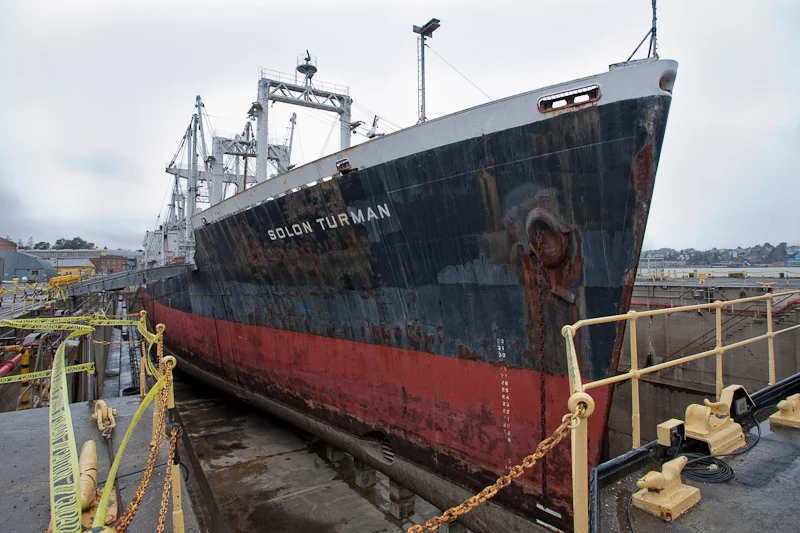
In 2010, Allied Defense Recycling received the MARAD contract to scrap two ships. S.S. Solon Turman is currently sitting in the dry dock. The next ship, S.S. President, is scheduled to arrive in March. Of the 20 ships scheduled to be removed from the Mothball Fleet by Sept 30, 2011, it hasn't been said how many will end up at Mare Island.

The presentation was held inside the former periscope maintenance building. Speakers included: Jay Anast (Director of Operations, ADR), Mayor Osby Davis and David Matsuda (Director, MARAD).


Jackling House
HISTORY

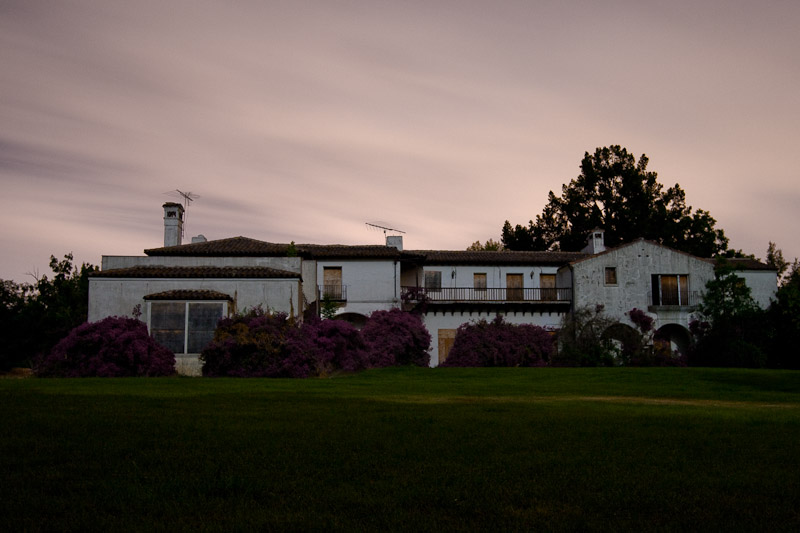
In 1925, famed architect George Washington Smith, famous for his Spanish Colonial Revival Style in Santa Barbara, designed and built a 14 room, 17,000 sq foot mansion for copper-mining baron Daniel Jackling in Woodside, California.
Jackling was born in 1869 and educated in mining and metallurgy at The Missouri School of Mines. He became known for his revolutionary methods regarding the processing of low-grade copper ores and the establishment of the Utah Mining Company in 1903. He went on to become a very successful executive with hands in a number of Western Copper companies. In fact, it has been said that 60% of the world's copper production was a direct effect of Jackling's development of his ore processing.
During the second World War, Jackling was honored for his outstanding wartime efforts, for serving as director of government explosive plants, and was awarded the Distinguished Service Medal by President Woodrow Wilson. He was also honored by the Western Society of Engineers with the Washington Award for "pioneering in large-scale mining and treatment of low-grade copper ores, releasing vast resources from formerly worthless deposits."
In 1956, at age 87, Jackling died in his Woodside home and after Mrs. Jackling's death in 1957, the property was subdivided and the Jackling's wealth was given to various organizations and charities, including Stanford University.
In the 1960's daughter of Bank of America's A.P. Giannini, Claire Giannini Hoffman, bought the parcel of land that contained the Champagne Paddocks, the estate's stables. In 1962, when Bing Crosby visited the property for a GOP fundraiser, he admitted to loving the house so much he wanted to buy it. Bill & Hilary Clinton also paid a number of visits to the house.
Apple CEO Steve Jobs purchased the house in 1984 and took residence for 10 years. In 2001, he petitioned to demolish the house and outbuildings. Tearing down a George Washington Smith house is neraly unheard of in Santa Barbara, where he constructed most of his work, and it wasn't understood in San Francisco either.
In 2004, Jobs finally received permission to tear the house down, but he received strong opposition from local preservationists; the "Upload Our Heritage" (UOH) Group. This battle went on for years and in 2006, he was told he could not demolish the house. Again in 2008 he submitted a request for demolition. Finally in Apri 2010, Jobs was given final permission to rid the property of the house.
Demolition on the house began on Monday, February 14th.
RECENT PHOTOS


Photo: "Playhouse"

Trenton Psychiatric Hospital was established in 1848 by health activist Dorthea Dix and was the first state run mental hospital in New Jersey and the first public mental hospital designed on the Kirkbride plan.