Photo: "Sea Air"

Sea View _MG_9919-Edit.jpg

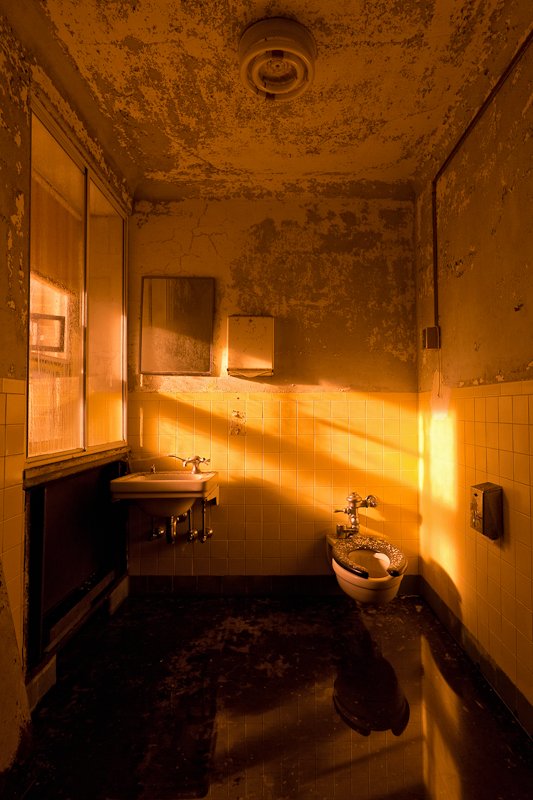
Construction of the New York Sanatorium began in 1913. It consisted of eight pavilions, four men and four women's, arranged around an Administration Building, a Children's Hospital (shown here), a Rehabilitation Center, power plant, laboratory and Nurse's Buildings.

It was here at this hospital that the first treatment for Tuberculosis was discovered. 

Photo: "Secured"

Kings Park _MG_0014-Edit.jpg

The Kings Park Psychiatric Center in Long Island, New York operated from 1885 to 1996. As patient populations began to grow in the early 1900's, the hospital began to expand. In the 1930's, the 13 story building, Building 93, was constructed. Upon opening in 1939, it became an infirmary for the geriatric patients and patients with physical ailments.

Photo: "Escape"

St. Nicholas _MG_5367-Edit.jpg

In 1931, the Philadelphia and Reading Coal and Iron Company's constructed the Saint Nicholas coal breaker in Gilberton, PA. The breaker was one of the largest in the world, with over 20 miles of track and 1.5 miles of conveyors. Each half of the building operated independently, but together they produced a combined total of 12,500 tons of coal per day.

The breaker operated for a number of years before closing in 1963.

Photo: "Spare"

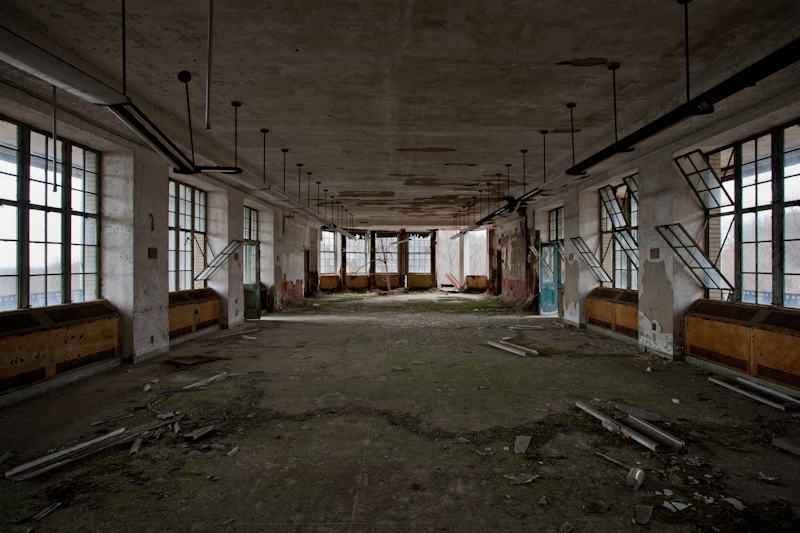
Upon opening its doors in 1904, Norwich State Hospital admitted 95 patients in one single building. Within a few short years patient numbers grew dramatically, causing the hospital to expand. Norwich quickly became a self-sufficient institution, with a power plant, farm, bakery and laboratory as well as a theatre and bowling alley for recreation.

Grossinger's Resort Indoor Pool

Years ago, the Grossinger's Resort in Liberty, NY, was booming with guests. During the summer months, Jews would congregate here as an escape from the big city and come to Grossinger's, a place they felt accepted. All the food that was prepared was Kosher and the ammenities provided were spoke highly of. Celebrities such as singer Eddie Fisher and boxer Rocky Marciano frequented the resort.

The indoor pool was designed by Morris Lapidus, who was also known as the "architect of make believe." It was one of the grand masterpieces of the resort. The pool was adorned with lounge chairs, a diving board, beautiful wood beams, brass orb lighting fixtures and two viewing windows which gave guests a submarine-like feel as they viewed the underwater activity in the pool.

Since the resort closed in 1986, many of the lawn chairs have gone missing, ferns and moss have began covering the tiles and the wooden beams have begun to rot, but the pool is still a marvel.

Grossinger's _MG_5216-Edit.jpg

"Poolside"

_MG_5167.jpg

"Bronzer"

Grossinger's _MG_5210-Edit.jpg

"No Diving"

"UFO (Part II)"

Photo: "Triple"

Mont Alto _MG_9396-Edit.jpg

Inside a triple patient room at the South Mountain Sanatorium in Pennsylvania.

This four story building at the Mont Alto State Sanatorium opened in 1940 and was a Children's Preventatorium until 1956. At that time, the building became a home for mentally retarded women. And then from 1965 until it closed in 1985, it housed geriatric patients.

Photo: "Far Out"

Adler Hotel _MG_4982-Edit.jpg

Guest room at the Adler Hotel in Sharon Springs, New York

Th Adler Hotel was built by Louis Adler in the late 1920's. He operated the hotel in the 1950's when it was purchased by another party. The hotel changed hands another three times before becoming abandoned in 2004. It is now owned by Sharon Springs, Inc, a Korean Investment Company with plans to renovate the hotel. 

Photo: "Personified"

Norwich _MG_4749-Edit.jpg

Norwich State Hospital opened its doors in 1904. In the early years, the Superntendents believed in the importance of education and that the mechanical restraint of patients was more effective than medicating them. However, in the 1940's a number of federally funded studies, done by Dr. W Paul Havens, led to the experimentation of hepatitis on patients, which the government only recently admitted to.