Dr. Joseph Trimble Rothrock
Dr. Joseph Rothrock was born in 1839. He attended public school for a few years, but due to poor health, he was taken out of school by his father and put to work on a local farm. He attended Harvard University until the Civil War broke out, when he was drafted. After being severely injured during battle, he was discharged and returned to Harvard. He graduated with a B.S. in Science and Botany, then moved on to finish Medical School at the University of Pennsylvania where he graduated in 1867.
Rothrock praciticed medicine throughout Pennsylvania for a number of years and in the late 1880's became President of the Pennsylvania Forestry Association. In 1904, he resigned due to poor health. One source claims that Dr. Rothrock also experienced "lung trouble" and suffered from tuberculosis, but in the early 1900's scientists were just beginning to learn the nature of such diseases.
The History of Tuberculosis
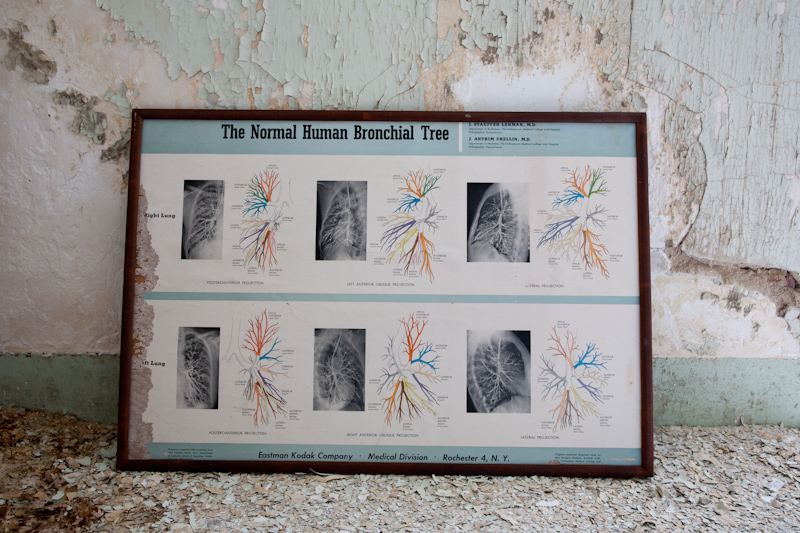
Tuberculosis in the nineteenth century was known as the "the white plague." Bovine tuberculosis, which was transfered to humans via cow's milk, would attack the bones, possibly leaving a patient crippled. Pulmonary tuberculosis, an airborne form, attacked the lungs and an infected person could spread the disease each time they coughed or spoke. At the time, the disease was difficult to treat since most patients would not see a doctor if they were experiencing symptoms (cough, lethargy, decline in health or pain in the chest) but most of the time, those who were infected wouldn't immediately exhibit any symptoms.
An infected patient experiencing the horrors of the disease would lose their appetite, cough severely, run a fever and have difficulty breathing. As the disease progressed towards the final stages, the body would waste away and the lung tissue would break up and be coughed up. The result was hollow faces with recessed eyes and shriveled bodies.
In 1882 Robert Kroch discovered the tubercle bacillus strain, which put a whole new spin on the treatment of the disease. After his discovery, the thought was that tuberculosis was preventable and curable. Most doctors treated patients by prescribing a change of location, fresh air, rest and excersise. This caused patients to be removed from their homes, where they could possibly infect others, and placed in a Sanatorium.
White Pine Camp: The Early Sanatorium (1901-1907)
Several additional shacks were built on the sanatorium campus over the next few years, due to private donations, and a few years later, Rothrock's camp received state funding. Construction began on an office building, water system and six cottages. Additionally, the funding helped furnish each cabin with beds, a kerosene lantern and woodstove.
In 1905, Rothrock started his own private sanatorium known as the Mountain Side Sanatorium, but only two short years later, he sold the property as he had no real intention to lead the fight against tuberculosis. At that time, the adjacent White Pine Camp housed 30 patients who paid one dollar per day for treatment, which was based on a balanced diet, fresh air and a careful balance of rest and excersise.
The Mont Alto Sanatorium (1907-1918)