
Point Richmond, California.
Night. Full moon. 80 seconds. Interior lit by LED flashlight. Exterior lit by moon and ambient light.
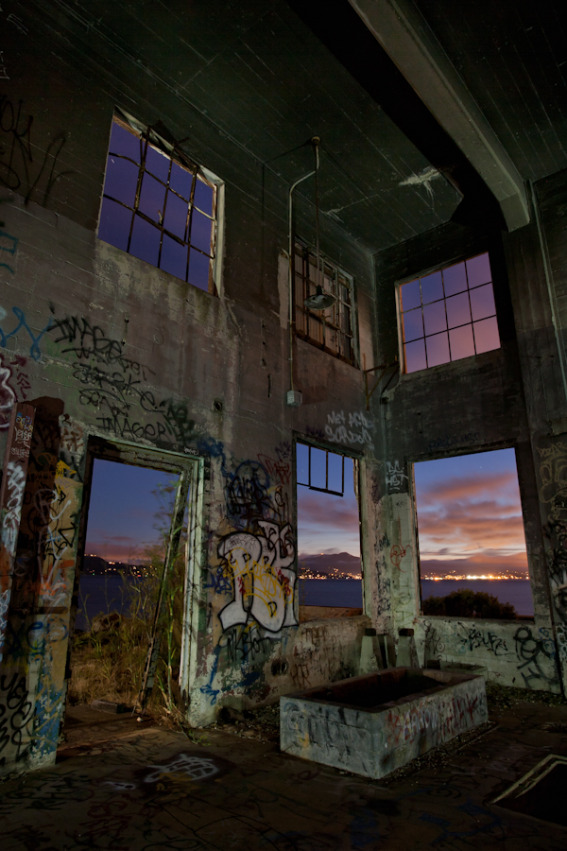
Point Richmond, California.
Night. Full moon. 80 seconds. Interior lit by LED flashlight. Exterior lit by moon and ambient light.

Whirley Crane at the Kaiser Shipyard #3.
The Richmond Shipyard #3 was one of four shipyards in Richmond, but the only one designed to be permanent. Toegether, the four shipyards produced 747 ships during World War II, which was more than any other yard in the country. The Shipyard used “Whirley” cranes to move prefabricated ship components into place. The Whirley Crane got its name due to the crane's ability to turn a full 360 degrees, which allowed the boom to achieve efficient speed.

This stairwell in the Salmon Building, home to the male criminally insane, at Norwich State Hospital would have been flanked at the top and bottom by a metal door. This would have prevented the patients from getting very far if one should escape. Fortunately, during the 70 years of the hospital's operation, no escapes were recorded from Salmon.
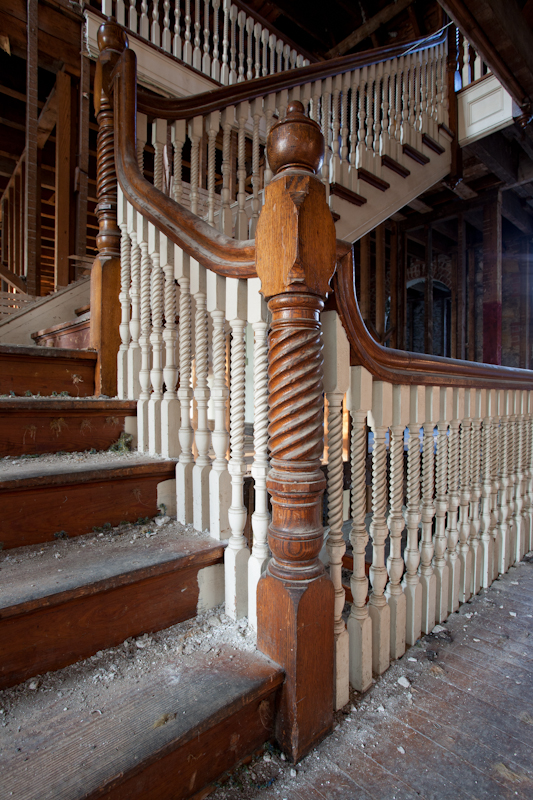
Most of the interior of the 1876 Abbey of St. Mary's Convent was gutted between 2003 and 2008, but the three intricately detailed staircases still remain.

A fern grows out of the wheel well of an abandoned crane at the Kaiser Drydocks in Richmond, California.

San Francisco at night, taken from Alcatraz during the June Nocturnes excursion.

Sun porch in the building 1 of the women's wards at this New York Tuberculosis Hospital.
In the 20th century, treatment for tuberculosis was based on ample light and fresh air. Sun porches were constructed in most tuberculosis hospitals as it was believed they would help ail those infected with the diseases.

The No.7 Allis-Chalmers 5-story vertical triple expansion pumping engine at the Hackensack Waterworks.

Patient room inside the Salmon Building at Norwich State Hospital.
Norwich State Hospital, constructed in 1904, was Connecticut's second public insane asylum. The Salmon building, next to one side of the Administration building, once housed the male criminally insane. The design of the ward was such that a number of doors were installed inside the hallway and for one door to be unlocked, the previous door must be closed and locked. This helped to ensure that during the 70 years of operation, not a single patient escaped from this ward.

The Abbey building of the St. Mary's Convent on Mount St. Gabriel was constructed in 1876. The chapel on the second floor was once responsible for providing services for the ailing nuns residing within the Abbey.
(More information and photos at The Kingston Lounge)
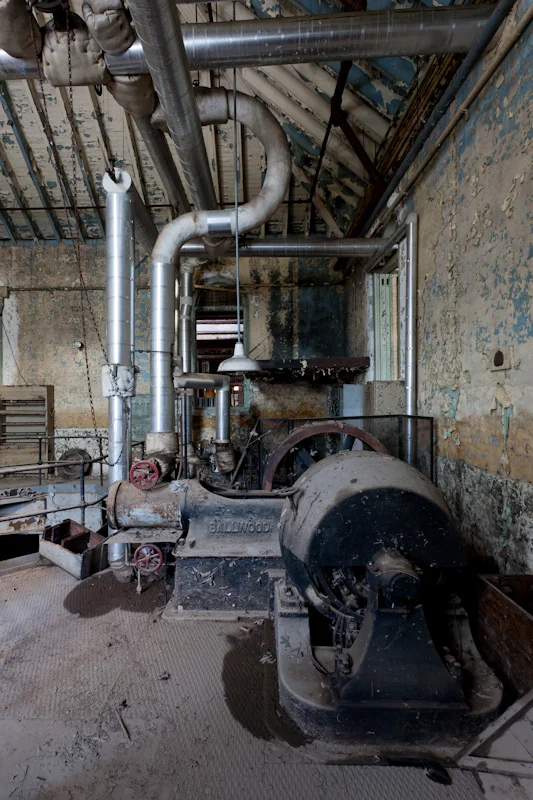
The Hackensack Water Co opened this plant in 1882. The facility supplied drinking water to the surrounding county and remained in operation for over 100 years until the plant was abandoned in 1993.

The Salmon building at Norwich State Hospital in Connecticut was designed as a male forensics building, housing the criminally insane deemed 'not guilty' by reason of insanity. Each window contained prison style metal bars and a heavy mesh screen. In the 70 years Norwich was in operation, no patients escaped from the Salmon ward.

Building 93 at Kings Park Psychaitric was constructed in 1939 and was designed as a geriatric infirmary and drug treatment center. The design was such that the building had a very small footprint to allow for light to enter each room as well as the hallways.

Artwork inside the Quad Buildings at Kings Park Psychiatric Hospital in Long Island, New York.
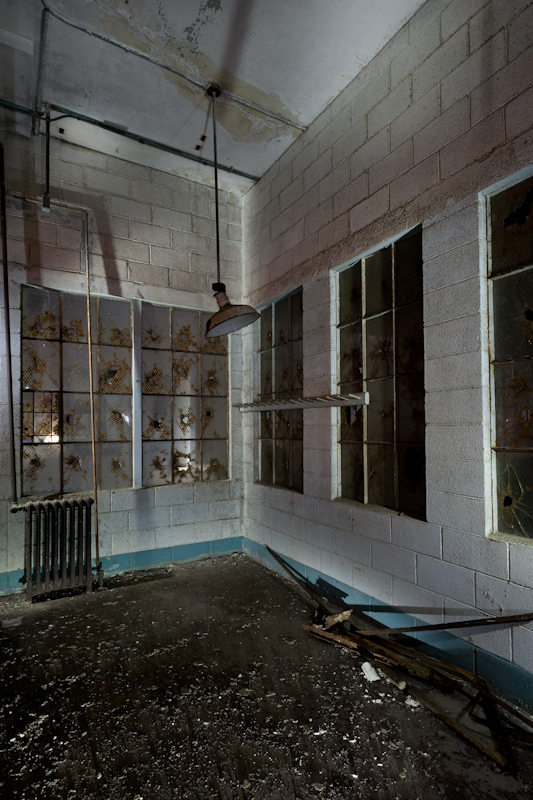
Inside the New Industries building at Alcatraz.
Built in the 1940's, prisoners washed laundry for the government. At one time, it was the largest laundry facility on the West Coast.