
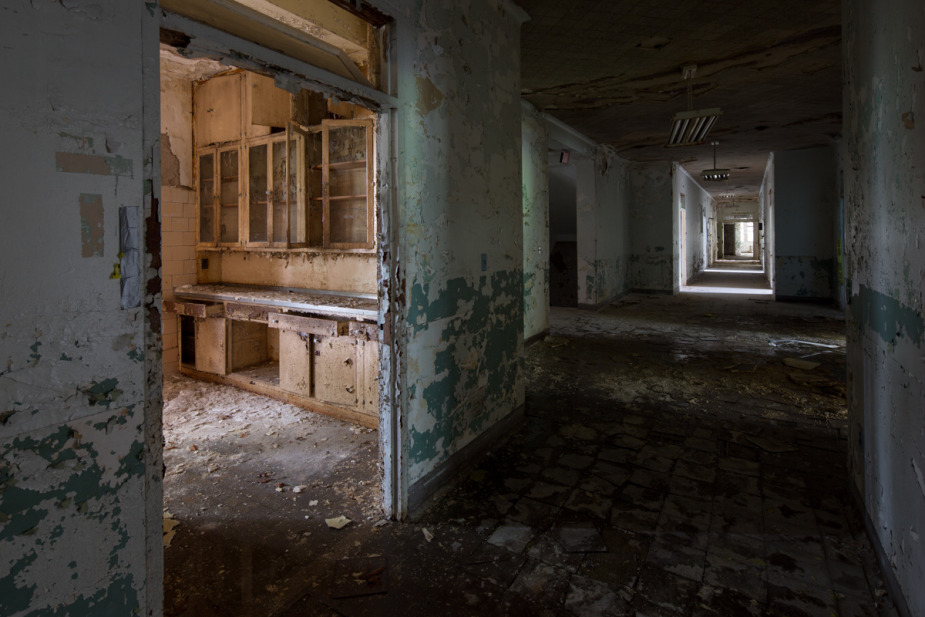
Corridor inside the former U.S. Marine Hospital on the Mississippi River in Tennessee.
Photo: "Swimmers"

Splash is a water-dwelling dinosaur, who plays in shallow streams all across the Pacific Northwest.
Photo: "Corridor Renovation"
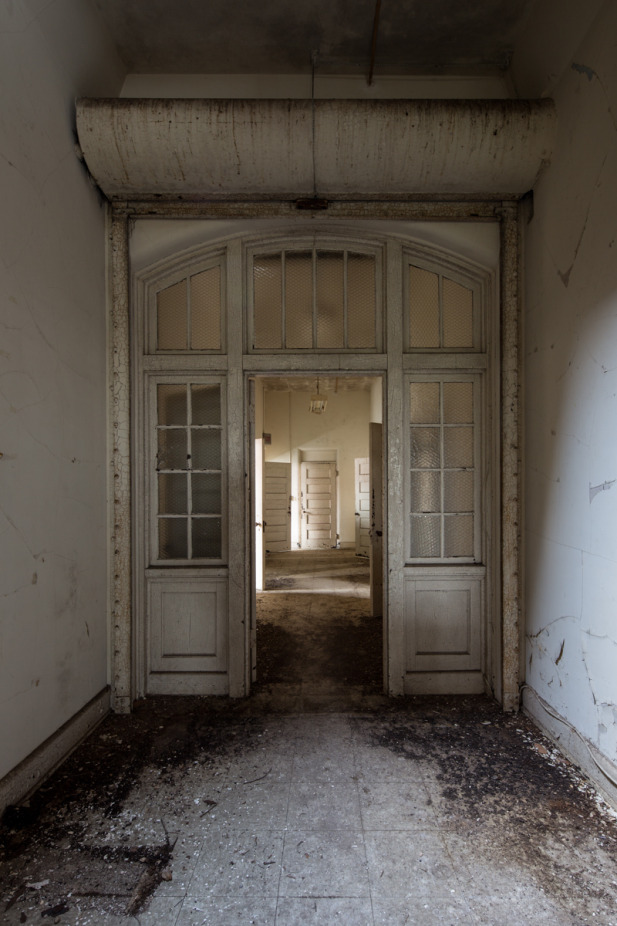
Construction began on the Babcock Building at the South Carolina Lunatic Asylum in 1857 and continued for seven years.
In many of the wards, roll down fire doors were installed, after the building's original construction, to help prevent flames from spreading into other wards if a fire broke out.
Photo: "A Dinosaur's Playground

Speck, Rex and Ridge playing at Zig Zag Falls in Oregon.
Photo: "Low Tide"

Low tide at the former Mare Island Naval Shipyard in Northern California.
(Night. 30 seconds. Lit by ambient light.)
Photo: "No Heat"
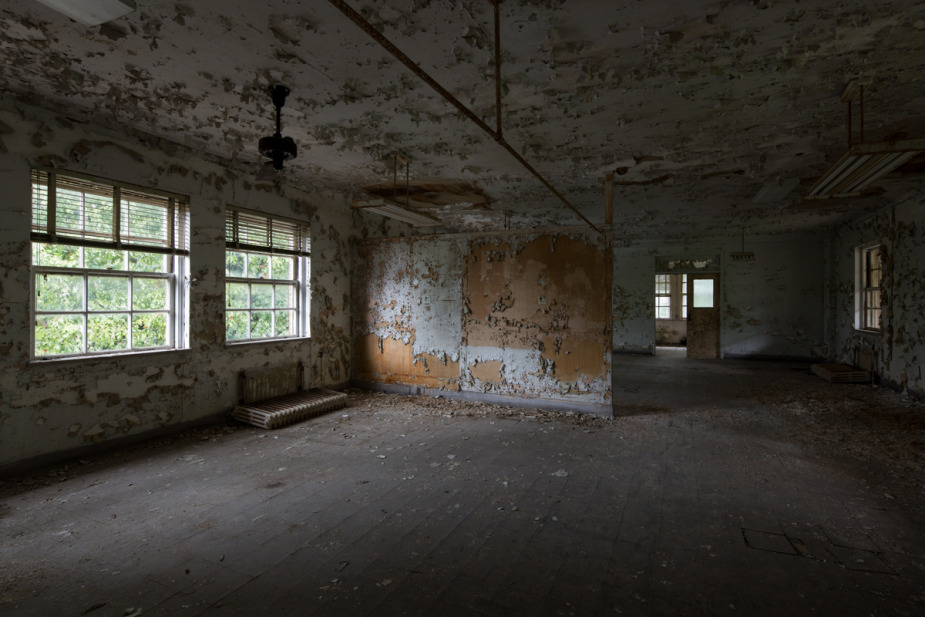
This main hospital building at the Tennessee U.S. Marine Hospital was constructed in the 1930's. It replaced the 1887 hospital building that played a role in the in the study of yellow fever.
Photo: "Crayon Box Rain"

I left San Francisco before the sun came up last Wednesday, to head south for the holiday. Just as I got out of the drizzly weather, I was greeted with a gorgeous, orange sunrise followed by a vibrant rainbow on the I-5.
Photo: "Blinded"
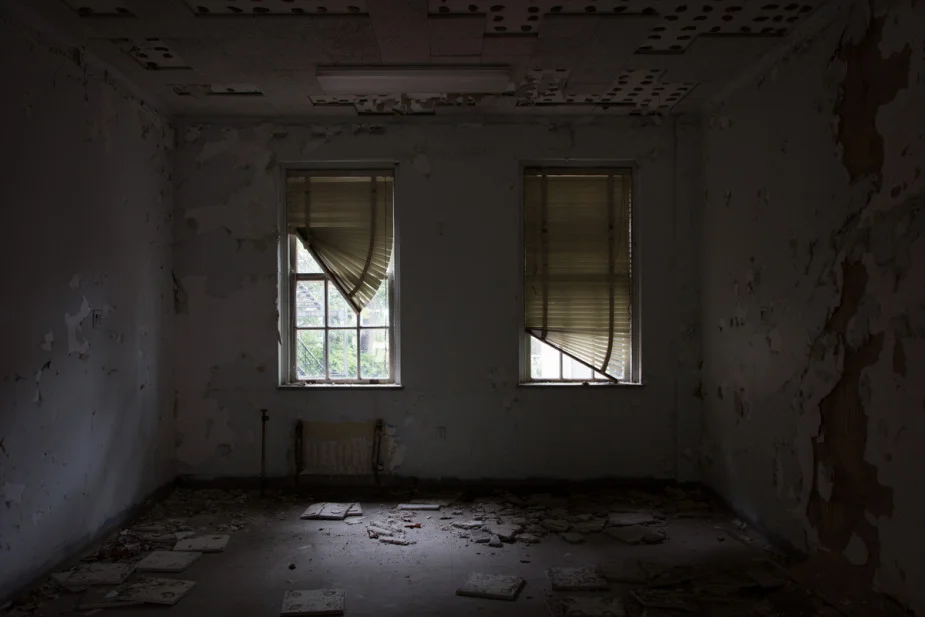
Second floor room inside the former U.S. Marine Hospital in Tennessee, constructed in the 1930's to replace the former hospital building from the 1800's.
Photo: "Swaying Sun"

I got back to San Francisco this morning after a weekend in San Diego visiting family for the holiday.
I drove most of the way last night, camped out in the Subaru and finished the drive this morning. The first hour of the drive was a bit boring, but I happily arrived in Santa Nella, one of the few decent stops along the I-5, during blue hour, so I picked out a spot along a farm road and shot the sunrise in the cold crisp air for an hour. It certainly helped to break up the early morning drive.
Photo: "Ward 5"

In 1778, Congress authorized the creation of a Hospital Service Act, to care for disabled and sick Marines. In 1779, they extended the care to include the Navy.
By the end of the Civil War, the Navy operated eight hospitals, including this one in Tennessee, constructed in the 1930's. The patients received excellent health care here and by contrast, weren't nearly as crowded as the Navy facilities.
Photo: "The Only Light"

Another view, during blue hour, from inside an Administration Building dayroom at Mayview State Hospital, a former psychiatric hospital in Pennsylvania.
This is the last image in the cue from this asylum. Sadly, it is currently being demolished, so these are some of the last images from this place...
Photo: "The Fallen"

In 1778, Congress authorized the creation of a U.S. Marine Hospital fund, known as the Hospital Service Act, to care for disabled and sick Marines. In 1779, they extended the care to include the Navy. At the time, each enlisted man had 20 cents deducted from their paycheck each month to pay for this program.
In 1887, a marine hospital was constructed on Indian land near the Mississippi River in Tennessee. The hospital operated for almost fifty years, and played a role in the study of yellow fever, before being torn down and replaced with a new building in 1937.
Nuclear Reactor Building


Had this plant been completed, this building would have housed one pressurized water reactor. The reactor, composed of uranium fuel rods, would have been kept under intense pressure while immersed in water. Water heated inside the reactor core (due to a fission of atoms) is pumped first to a steam generator, then transfered to a secondary system where the water is turned into steam, powering the turbines. Because this system is designed in two separate circuits, there is much less chance of radioactive contamination.
Satsop Nuclear Plant construction began in 1977, but was halted five years later due to budget issues. The site was maintained as though construction would resume a few years later, but in 1993, the project was cancelled. The plant now sits 76% completed, but has been repurposed by a number of businesses, including NASA.
2012 Holiday Print Sale!
Holiday Print Sale
(November 14 - December 15)
I have selected 15 images, 2 of which are brand new, to be offered at 50% off in honor of the holidays.
$25 - 8x12"
$35 - 10x15"
$45 - 12x18"
$85 - 16x24"
+ $8 flat rate for shipping (in the US)
To order, send a PayPal payment to: amy@amyheiden.com.
(Be sure to put your image and size selection in the notes.)
(If you know someone who might be interested in a print, please pass this along.)

1. Sunset, Santa Cruz County

2. Zig Zag Falls, Oregon

3. Bay Bridge, San Francisco

4. Marshall Beach, San Francisco

5. T-Rex, Cabazon Dinosaurs

6. Moonrise over bus maintenance yard, California

7. USS Iowa, California

8. Cooling Tower, Nuclear Power Plant

9. Weston State Hospital in fog, West Virginia

10. Administration staircase, Virginia State Hospital
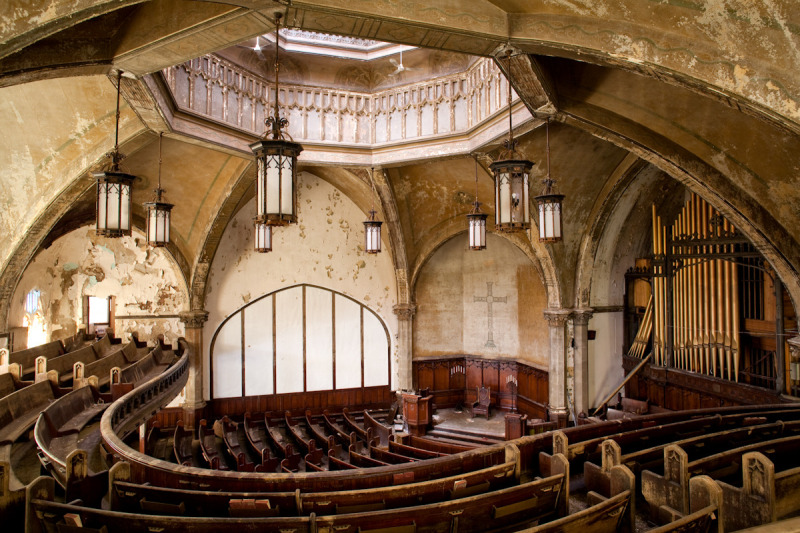
11. Woodward Ave Church, Detroit

12. Bowling Alley, NY Psychiatric Hospital

13. Seclusion Rooms, South Carolina Lunatic Asylum

14. House at a former commune

15. Patient wing, State Hospital
Photo: "Mud Barges"

The Mare Island Naval Shipyard was the first US naval base on the Pacific Ocean. The land was purchased in the 1850's and shipbuilding began immediately. During the years of operation the shipyard constructed 89 vessels and WWI, Mare Island was a major player in the construction of ships. To this day, they hold the record for the quickest construction of a destroyer (built in just under 18 days).